
Squad Busters: Has the Project Grown into a Fully Independent Game?
When Supercell first revealed Squad Busters, many players viewed it as an experimental crossover rather than a fully fledged release. Bringing together characters from Clash of Clans, Brawl Stars, Hay Day and Boom Beach was a bold move, but it also raised questions. Was this a celebratory spin-off built on familiar assets, or a long-term strategic product designed to stand on its own? By 2026, with multiple updates, competitive events and clear monetisation adjustments behind it, we can assess whether Squad Busters has matured into an independent mobile title with its own identity.
From Crossover Concept to Structured Live Service
Squad Busters launched globally in 2024 after a series of soft launches and public tests. At release, it attracted significant attention thanks to its multi-franchise roster and approachable gameplay loop: players collect characters, merge them during matches, and compete in ten-player sessions focused on gem accumulation. Early criticism centred on balance issues, perceived randomness, and monetisation pacing. However, Supercell responded with structured seasonal updates and clearer progression systems throughout 2025.
By mid-2026, the game operates on a predictable live service cycle. New worlds, modifiers and character variants are introduced in quarterly content drops, rather than sporadic patches. This consistency has helped stabilise retention rates. According to publicly available mobile analytics reports from 2025–2026, Squad Busters maintained a steady mid-tier grossing position in several European markets, rather than experiencing the sharp post-launch decline often seen in crossover projects.
The competitive layer has also expanded. Limited-time ranked events and regional leaderboards now provide meaningful endgame objectives. While it is not positioned as a hardcore esports product like Brawl Stars, it has developed a structured competitive ecosystem that supports long-term engagement. This shift from novelty to organised live operations is a strong indicator that the project is treated internally as a core title.
Gameplay Depth Beyond Familiar Characters
At first glance, Squad Busters relies heavily on brand recognition. Yet by 2026, its mechanics have evolved beyond a simple character showcase. Match modifiers such as loot goblin invasions, environmental hazards and timed power surges significantly alter strategy from round to round. Players must adapt squad composition rather than rely solely on favourite heroes.
The fusion system, initially criticised for encouraging passive play, has been rebalanced. Risk-reward mechanics now reward active map control and tactical positioning. Certain characters gain synergy bonuses when paired with units from different franchises, encouraging experimentation instead of predictable meta builds.
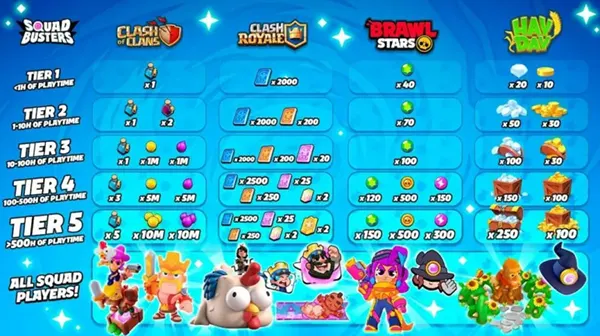
Importantly, the game no longer feels like a promotional hub for other Supercell products. New original characters introduced in 2025 and 2026 are exclusive to Squad Busters. Their lore and abilities are not borrowed but designed specifically for this environment. This creative independence strengthens the argument that the title has moved beyond being a crossover novelty.
Monetisation, Fairness and Player Trust
One of the most debated aspects at launch was monetisation. Early progression was tied heavily to chest timers and consumable-based upgrades, leading to accusations of pay-to-accelerate imbalance. Throughout 2025, Supercell adjusted reward scaling, increased free progression opportunities and reduced the frequency of high-impact paid boosts in competitive modes.
By 2026, the monetisation model aligns more closely with cosmetic-driven revenue, similar to modern iterations of Clash Royale and Brawl Stars. Skins, visual squad trails and limited seasonal themes now represent the majority of premium purchases. Competitive advantages tied directly to spending have been moderated, improving perceived fairness.
Transparency has also improved. Patch notes now include detailed balance explanations rather than brief summaries. For players concerned with long-term investment, this level of communication matters. Trust is built not through marketing language but through predictable updates and clearly stated design intentions.
Retention Metrics and Market Position in 2026
Publicly accessible mobile analytics platforms show that Squad Busters continues to perform solidly in Western Europe and parts of Asia. While it has not surpassed Clash of Clans in revenue or cultural impact, it has avoided the rapid decline typical of short-lived experimental games. Average session lengths remain competitive within the casual-strategy segment.
The player base has diversified. Initially dominated by existing Supercell fans, the 2026 audience includes a measurable share of users whose first contact with the company came through Squad Busters itself. That shift is critical: it indicates the game attracts players independently of nostalgia.
Its position in the broader market can be described as stable rather than explosive. It competes with hybrid casual battlers and auto-combat arena titles, carving out a niche between accessible design and strategic layering. Stability, in mobile publishing terms, often signals a sustainable product rather than a temporary trend.
Creative Identity and Long-Term Viability
A game becomes independent not only through revenue but through identity. By 2026, Squad Busters features distinct UI styling, sound design variations and thematic worlds that differ noticeably from other Supercell projects. While character models originate from familiar franchises, the overall presentation has developed its own tone.
The narrative framing has also evolved. Seasonal themes now include original event storylines that connect characters in ways not previously explored in their home games. These small but consistent storytelling efforts contribute to world-building unique to Squad Busters.
Long-term viability depends on adaptability. Supercell has demonstrated willingness to rework mechanics based on feedback rather than protecting initial design choices. That flexibility reduces the risk of stagnation and suggests confidence in the project’s multi-year roadmap.
Is Squad Busters a Standalone Success?
In practical terms, Squad Busters in 2026 operates as a fully supported flagship alongside other Supercell titles. It receives dedicated updates, exclusive characters and structured seasonal content. It is not maintained as a secondary experiment or marketing tool.
It may not redefine the mobile strategy genre, but it has established a sustainable ecosystem, consistent engagement and a recognisable gameplay loop distinct from its origins. That combination meets the criteria of an independent live service game.
Therefore, the answer is nuanced but clear: Squad Busters has grown beyond its crossover roots. It stands today not merely as a celebration of past franchises, but as a mature, evolving product with its own direction in the competitive 2026 mobile gaming landscape.