
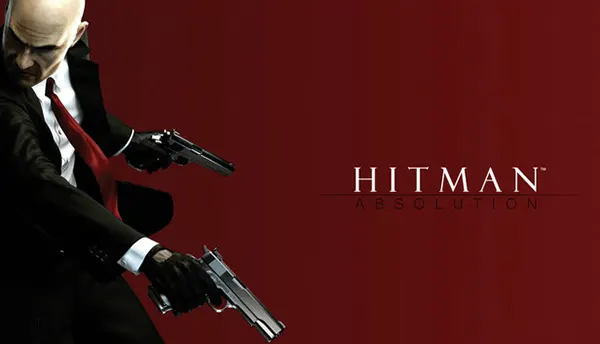
Hitman: Absolution Mobile: Contracts Mode, Mission Routes and System Requirements
Hitman: Absolution arrived on iOS and Android in October 2025, bringing Agent 47’s full stealth-action campaign to phones and tablets with redesigned touch controls and support for external controllers. The mobile edition became more complete on 14 May 2026, when Feral Interactive added Contracts as a free update. This mode turns familiar campaign locations into repeatable assassination challenges created by players, while the 20 story missions remain the best place to learn disguises, patrol patterns, distractions and controlled combat. The guide below explains how Contracts works, how to choose a practical route through difficult missions and what hardware, operating system and free storage are required in 2026.
How Contracts Mode Works on Mobile
Contracts is an asynchronous challenge mode rather than a live competitive match. A creator enters one of the available story environments, selects up to three people as marks and completes the assignment personally. The finished run becomes the model for the published contract. Other players then attempt the same target list and try to equal or improve the original performance. Because the challenge is built through normal play, there is no separate mission editor filled with menus and technical settings. The creator simply chooses the marks, acts out the intended solution and reaches the exit.
The conditions recorded by a contract can make a simple elimination much harder. The creator may establish a preferred weapon, a particular disguise, a hidden body or an apparent accident as part of the challenge. A contract can therefore ask for more than reaching a target and pulling the trigger. It may require the player to enter a restricted area in the right clothing, obtain an item without raising an alarm, wait for a safe moment and leave without creating additional casualties. The most effective assignments are demanding but still readable: players should be able to understand what went wrong and improve on the next attempt.
The May 2026 update also brought online sharing, Featured Contracts selected by Feral and leaderboards for score chasing. By July 2026, the shared competition includes players on iOS, Android and Nintendo Switch, although mobile owners received the mode first. An internet connection is therefore important when browsing assignments, publishing a creation or checking rankings. The campaign remains the better choice for uninterrupted solo play, while Contracts is designed for repeated attempts in which route knowledge, timing and precise fulfilment of the conditions matter more than simply surviving.
Creating and Completing Better Contracts
A good first contract should use one or two marks in an area you already know. Before selecting anyone, walk through the location and note where guards stop, which doors require a disguise, where useful objects are placed and how long the target remains isolated. Choose a route that can be repeated without depending on unpredictable chaos. A target who regularly enters a quiet room creates a fair stealth challenge; a person surrounded by a dense crowd may produce a frustrating assignment unless there is a reliable accident or distraction nearby. Testing the route twice before publishing helps reveal weak points.
When attempting a contract created by someone else, treat the first run as reconnaissance rather than a record attempt. Confirm the marks, study their movement and locate the required weapon or clothing before committing to an elimination. If the assignment specifies a disguise, plan where it can be obtained and whether someone in the same uniform is likely to recognise that Agent 47 does not belong there. If bodies must be hidden, identify containers before the kill. This approach prevents the common mistake of completing the main objective only to lose time, score or payment because one final condition cannot be met.
Faster results usually come from reducing unnecessary actions, not from sprinting through every corridor. Once the route is understood, remove detours, prepare distractions in advance and wait in positions that give a clear view of both the mark and nearby witnesses. Use checkpoints as mental sections: entry, disguise, equipment, elimination and exit. If a run fails, change only one part at a time so the cause is obvious. Contracts rewards repetition because each attempt can refine movement, timing and risk. A clean route that can be performed consistently is more valuable than a spectacular method that succeeds once by chance.
Practical Ways to Complete Story Missions
The campaign is built around observation. On entering a new area, resist the urge to move directly towards the objective marker. Watch the nearest patrol, identify public and restricted spaces, and look for side routes such as windows, ledges, maintenance rooms or staff-only doors. Instinct Mode can help identify targets, follow enemy movement and highlight useful points of interest, but it works best as a confirmation tool rather than a substitute for watching the scene. The safest route often appears only after the player has allowed a complete patrol cycle to unfold.
Disguises are central to many missions, but they do not provide complete protection. Clothing can grant access to an area, yet guards or workers wearing the same uniform may pay closer attention to Agent 47. Move naturally, avoid standing directly in front of suspicious characters and use crowds or environmental actions to reduce scrutiny where possible. Before taking a disguise, consider the exit route as well as the entry route. Clothing that reaches the target may be unsuitable for leaving if the final corridor is controlled by people who know every member of that group.
Mission difficulty changes how much help the game provides and how quickly enemies respond. New players gain more by learning a level on a forgiving setting than by repeatedly failing on Purist, which removes much of the guidance and makes opponents more dangerous. Complete the basic objectives first, then replay the mission to pursue challenges, cleaner ratings or alternative eliminations. Hitman: Absolution is at its strongest when a level is treated as a space to learn rather than a one-use sequence. Familiarity turns a tense first visit into a planned operation with several viable routes.
Stealth, Disguises and Controlled Combat
Silent play is usually the most dependable method because every loud action changes guard behaviour. A thrown object can pull one person away from a doorway, a switched-on device can create a short opening, and a carefully placed item can move a target into a safer position. Use distractions with a clear purpose and avoid stacking several at once, as overlapping reactions make movement harder to predict. After a quiet takedown, move the body before searching the area. A hidden body protects the disguise, reduces the chance of an alarm and keeps later patrols close to their expected pattern.
Accidents are useful because they can remove a target without making the scene look like an obvious attack, but they still require preparation. Check who can see the interaction point, whether the target actually reaches it and whether the escape path remains open afterwards. Poison, falling objects, exposed electricity and environmental machinery can create strong opportunities in the right mission, although not every location offers the same tools. The practical rule is simple: choose the method that fits the route already available instead of crossing half the map to force a more elaborate elimination.
Combat is sometimes unavoidable, especially after a disguise fails or a witness reaches an alarm. In that situation, move to cover, break the enemy’s line of sight and avoid fighting in open rooms with several entrances. Point Shooting can slow the action and mark several opponents, but it should be saved for a genuine emergency rather than used as the first answer to every obstacle. Once the immediate threat is controlled, change position and reassess. Continuing to fire from the same place attracts reinforcements and removes the main advantage Agent 47 has: the ability to disappear, change appearance and approach from another direction.
Mobile Controls, Performance and System Requirements
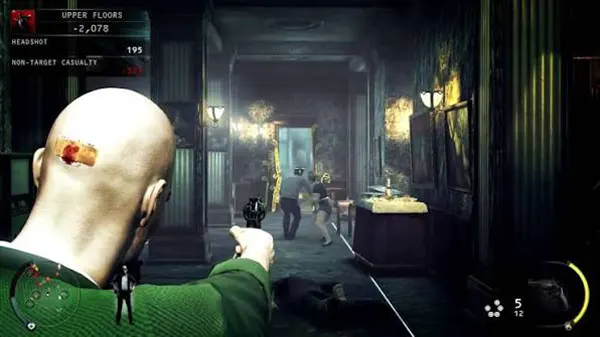
The mobile version uses customisable touch controls, so button position and size should be adjusted before a difficult mission. Place crouch, interaction, weapon selection and Instinct where they can be reached without covering the centre of the screen. Players who struggle with fast aiming may prefer a compatible gamepad, while supported keyboard and mouse setups can offer more precise camera movement on a tablet. Touch controls remain suitable for stealth because most actions depend on timing and positioning, but an external controller can make sudden combat and careful firearm use more comfortable.
On Apple devices, Hitman: Absolution requires iOS or iPadOS 18 and an A12 Bionic chip or newer. Feral lists iPhone XR and later models, including the second-generation iPhone SE and newer, as supported. For tablets, the published baseline includes the eighth-generation iPad, fifth-generation iPad mini, third-generation iPad Air and third-generation iPad Pro or later. Compatibility is based on both the operating system and the processor, so installing iOS 18 on an older unsupported device does not make it suitable for the game.
On Android, the official requirement is Android 13 or later, but the operating system alone is not enough. Support also depends on the phone or tablet’s chipset and graphics capability. Google Play normally prevents a purchase on hardware that Feral does not expect to run the game properly, although rare identification errors are possible. A device that can install the game should still be checked against Feral’s current verified-device information before purchase, particularly if it uses an unusual chipset, a regional hardware variant or limited memory.
Preparing Your Device for a Stable Installation
Both mobile versions require 12 GB of free storage for installation, and Feral recommends keeping at least twice that amount available to avoid initial setup problems. The App Store may show a download size of roughly 4.1 GB, but that figure does not include all temporary unpacking space and installed data. Clearing about 24 GB before downloading is the safer choice. Keep the device connected to reliable Wi-Fi, close large background downloads and do not assume that a nearly full phone will complete the installation simply because the store page displays a smaller file size.
Long missions can place sustained load on the processor and battery. Start with the default graphics preset, then reduce visual quality if the device becomes unusually warm, the frame rate drops or touch response feels inconsistent. Avoid playing while the phone is charging under a case that traps heat, and leave enough battery for the full mission because a forced shutdown can interrupt progress. A short restart before the first launch may also free memory used by other apps. These steps do not increase the device’s raw power, but they can prevent avoidable instability.
Before buying, confirm the operating system, model generation, available storage and store compatibility rather than relying on the phone’s age or price. After installation, update the game to the latest 2026 version so Contracts, crash fixes and controller corrections are included. Players mainly interested in the story should first test touch sensitivity and graphics settings in an early mission. Those planning to use Contracts should also confirm a stable internet connection and sign-in access before creating a demanding assignment. Proper preparation makes the mobile edition far easier to use and leaves the player free to focus on routes, disguises and timing.