
World of Dokkaebi: Korean MMORPG with Pixel Art, 12 Skill Styles and an AI Assistant
World of Dokkaebi is a Korean fantasy MMORPG developed by Supercat and published by Kakao Games, officially released in South Korea on 8 October 2026. The mobile game combines retro-inspired pixel characters with three-dimensional environments, traditional Korean folklore and a combat system that removes conventional character classes. Instead of choosing a warrior, mage or archer at the beginning, players create their own fighting style from 12 skill categories and more than 90 abilities. An integrated AI assistant called Myorong helps with character development, equipment decisions and activity records. The game also places considerable emphasis on cooperation, with shared boss encounters, guild activities and separate areas for competitive battles.
World of Dokkaebi: Release, Story and Korean-Inspired Pixel Graphics
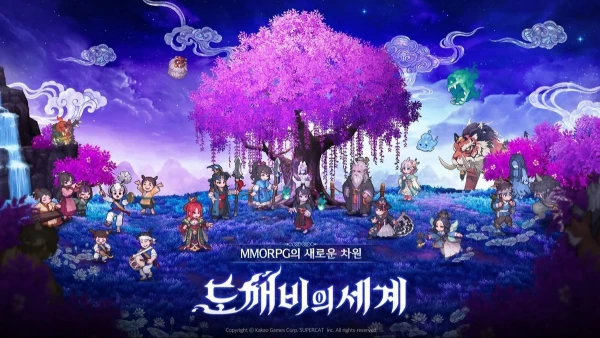
World of Dokkaebi, known in South Korea as Dokkaebi’s World (도깨비의세계), was developed by Supercat, a studio experienced in creating games with pixel graphics, including The Kingdom of the Winds: Yeon. Kakao Games handles publishing and operation. The official Korean release took place at 11:00 a.m. local time on 8 October 2026, following several presentations that introduced its combat mechanics, visual design and multiplayer features. The developers describe the title as a 2.5D MMORPG, meaning that it combines two-dimensional characters with environments built in three dimensions. This approach allows the game to preserve the appearance of traditional pixel art while providing a greater sense of depth during exploration and combat.
The story draws on Myeolgwi Sudojeon, a Korean web novel and webtoon associated with writer Yeon U-sol and REDICE Studio. Rather than directly reproducing the original storyline, World of Dokkaebi takes place approximately 300 years before its events. Players enter a fantasy setting inhabited by humans, supernatural spirits and dokkaebi, creatures commonly associated with Korean folklore. These beings are often compared with goblins, although their origins and characteristics differ from familiar European fantasy monsters. The playable character is a Dosa, a practitioner of supernatural arts who becomes involved in conflicts between these groups. This earlier historical setting allows the developers to introduce characters, locations and events that connect with the wider fictional universe without requiring players to have read the source material.
The central narrative concerns a period when humans and dokkaebi are beginning to overcome their mutual distrust. An attack on the protagonist’s sect disrupts this fragile relationship and sets the story in motion. Alongside the dokkaebi companion Mongryeon, the protagonist pursues those responsible and attempts to stop a dangerous ritual. The encounter ends with Mongryeon being affected by dark energy, while the protagonist subsequently awakens in the realm of the dokkaebi. Recovering lost strength, finding the missing companion and identifying the force behind the attack become important motivations for the journey. The story therefore provides a clearer personal objective than simply increasing a character’s level, while its supernatural setting supports encounters with spirits, monsters and powerful enemies.
How the 2.5D Visual Style Changes Exploration
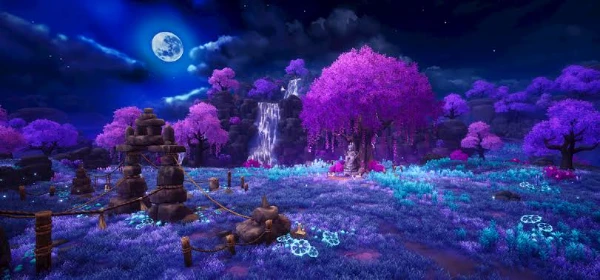
One of the most recognisable elements of World of Dokkaebi is its combination of detailed pixel characters and three-dimensional scenery. Buildings, paths, landscapes and architectural features have physical depth, while character models retain the sharp silhouettes associated with classic Korean role-playing games. The developers also apply three-dimensional lighting and shadows to the pixel characters themselves, helping them fit naturally into their surroundings. The camera supports 360-degree rotation, so players can examine towns, structures and battle areas from different directions. This is a meaningful distinction from older two-dimensional MMORPGs, where movement and the viewing angle are generally more restricted. Here, traditional-looking characters move through spaces designed to communicate changes in height, distance and perspective.
Korean cultural influences extend well beyond the game’s monsters. Locations incorporate traditional tiled roofs, stone lanterns, decorative wooden structures and jangseung, the carved guardian poles historically associated with Korean villages. These details help distinguish World of Dokkaebi from fantasy MMORPGs built primarily around medieval European castles and mythology. The visual approach is particularly relevant during exploration because cultural objects form part of the scenery rather than appearing only in story sequences. Towns and outdoor areas combine recognisable architectural influences with supernatural elements, creating an environment that reflects the relationship between the human and spirit worlds. The pixel artwork also gives characters distinctive outlines, which can make their movements easier to recognise when several players occupy the same area.
Character appearance can be personalised through hairstyles, clothing and colour changes. The developers have stated that cosmetic outfits and mounts do not provide character growth statistics, separating visual preferences from combat progression. Clothing supports dyeing, including the ability to apply different colours to several parts of an outfit. This gives players room to create a distinctive appearance without selecting equipment solely because of a statistical advantage. Mounts are also part of the game’s presentation and travel systems. Although World of Dokkaebi uses a nostalgic visual style, its three-dimensional environments, customisation options and modern interface distinguish it from a straightforward recreation of an older mobile MMORPG. The result is a game that uses pixel art as a deliberate design choice rather than a technical limitation.
12 Skill Styles and a Class-Free Combat System
World of Dokkaebi replaces the conventional class selection system with 12 skill styles and a collection of more than 90 abilities, known as Dosul. Players are not permanently assigned to a warrior, healer, archer or spellcaster role when creating a character. Instead, they select and combine skills to determine how their character fights. The available combinations can be changed to suit different activities, including ordinary monster hunting, boss encounters and guild content. This design reduces the need to create several characters simply to experience different combat roles. A player who concentrates on dealing damage during routine exploration can experiment with defensive or supportive abilities when participating in more demanding group activities.
The 12 styles belong to four broader combat groups. Frontal Firepower focuses on direct damage, including concentrated attacks against individual enemies and abilities that strike multiple targets. Distance and Flow covers approaches based on positioning, ranged attacks and maintaining pressure during longer encounters. Variables and Control includes skills intended to restrict enemy movements, apply weakening effects or change the conditions of a fight. Allies and Frontline Protection concentrates on defensive functions, healing and strengthening other characters. These groups provide a practical starting point for understanding the combat system. Rather than memorising every available skill immediately, beginners can first identify the kind of contribution they want to make and then experiment with abilities from the corresponding group.
The absence of fixed classes does not mean that every skill combination will be equally effective. An offensive arrangement may help defeat ordinary monsters quickly but offer limited protection during a difficult boss encounter. Similarly, a defensive setup might be useful in a guild raid without being the fastest option for solo hunting. Players therefore need to consider the purpose of each activity before adjusting their abilities. The developers have aimed to make individual skills comparatively straightforward to understand, avoiding excessive requirements and complicated activation conditions. Nevertheless, the order in which abilities are used and the timing of attacks can still influence combat performance. This gives newer players an accessible starting point while leaving room for more deliberate combinations as their understanding improves.
Skill Combinations, Divine Mind Awakening and Character Progression
A particularly important combat mechanic is called Sinsik Gaebang, commonly translated as Divine Mind Awakening or Divine Mind Unleashing. It activates when three equipped skills belong to the same style, creating an additional effect linked to that particular combination. Depending on the selected abilities, this can strengthen an ultimate attack, modify the behaviour of existing skills or activate a specialised combat mechanism. The feature encourages players to consider relationships between abilities instead of selecting individual attacks entirely on the basis of their damage figures. For example, a player interested in a concentrated offensive approach can examine whether three compatible skills provide a useful awakening effect, rather than combining unrelated attacks without considering their interaction.
The system also creates choices between specialisation and flexibility. Selecting three abilities from one style can unlock the corresponding awakening effect, while mixing several styles may provide a wider range of offensive, defensive or supportive actions. Neither approach should automatically be regarded as the strongest for every encounter. A group fighting a dangerous boss might benefit from stronger protection or control, whereas routine monster hunting may favour consistent damage and shorter battles. Players can evaluate combinations by comparing how reliably they defeat enemies, whether they can maintain their health and how their abilities perform alongside teammates. As skills develop, their performance and visual effects can also change, giving progression a visible impact beyond improvements to numerical attributes.
For beginners, a sensible approach is to start with a manageable selection of skills and make adjustments after gaining experience with different enemies. During solo hunting, combining dependable damage with an ability that improves survival can make mistakes less costly. When joining group content, it becomes useful to examine which roles are already covered by teammates before changing the setup. Players should also pay attention to the awakening condition, since replacing one skill may remove a useful three-skill combination. The important advantage of World of Dokkaebi’s system is that experimentation does not require abandoning an established character and starting again with another class. However, flexibility still requires thoughtful decisions about progression resources, equipment and the abilities most relevant to a player’s preferred activities.
Myorong AI Assistant, Multiplayer Activities and the Game Economy
World of Dokkaebi includes an internally developed AI assistant named Myorong, designed to help players understand their progress and make practical decisions about character development. The assistant works with information from the player’s activity history and growth records, comparing selected data with that of other players who have reached similar stages. It can identify areas where a character may need improvement and provide guidance concerning equipment or progression priorities. This differs from a conventional help menu that presents the same instructions to everyone. Myorong is intended to connect its recommendations with the user’s actual activity, making it easier to identify possible reasons for slow development or difficulties with particular content.
The assistant can also display records of completed hunting activities and information about how in-game currency has been earned or spent. These functions are useful in an MMORPG where character development involves repeated activities and several types of resources. A player who has spent a substantial amount of currency without achieving the expected improvement can review the available records and consider different priorities. Myorong additionally supports information about guild participation and activity history, although the developers stated that some guild-related functions would arrive through later updates. It should not be confused with an AI system that independently plays the entire game or guarantees optimal character builds. Its confirmed role is to organise information and provide recommendations that players can evaluate for themselves.
The multiplayer structure combines shared activities with optional competition. Standard outdoor areas do not permit unrestricted player killing, so other players cannot simply attack one another while they are completing ordinary quests or hunting monsters. Cooperative activities include field bosses, raids and guild objectives that require groups to coordinate their efforts. Field boss encounters have a reward structure in which the total rewards increase as more participants join, encouraging wider cooperation rather than concentrating every benefit among a small number of players. Guild members can also work together to restore altars, defeat powerful enemies and earn contribution points. Competitive battles remain available through designated modes, keeping ordinary exploration separate from direct player-versus-player conflict.
Guild Activities, Offline Progression and What Players Should Know
World of Dokkaebi offers several multiplayer activities beyond ordinary field hunting. Barrier Zone Defence involves protecting an important objective against attacking enemies, while raids require players to confront powerful bosses together. The Tower of Ascension is seasonal content in which AI-controlled representations of guild members can participate as companions. Guild members can also register character avatars for certain activities, allowing those representations to continue contributing without requiring everyone to participate simultaneously. An additional offline hunting feature supports up to eight hours of automated hunting per day. These systems are intended to reduce the pressure to remain connected continuously, although players still need to manage their characters, equipment and available resources when they return.
Competitive content includes smaller duels and large-scale battles. The developers presented modes such as Battlefield of Falling Blossoms, Garden of Delusion, Divine Artifact Contest and Dimensional Conquest, with the wider PvP design accommodating battles involving very large numbers of participants. Battlefield of Falling Blossoms features competition between three servers on a two-week rotation, while rewarding several forms of contribution rather than focusing exclusively on defeating opposing players. Participants can earn points through activities such as fighting hostile spirits, helping secure objectives and supporting allied forces. This gives players who prefer cooperative objectives a possible role within competitive events. However, the exact availability, entry requirements and rules of individual modes should be checked in the current game, particularly where features were announced for staged introduction.
The in-game economy uses Geumjeon, or Gold, as an important currency that can be earned through activities such as field bosses, raids, guild content and the sale of items. Developers have confirmed that the player exchange supports trading with earnable currency rather than requiring a premium currency for every transaction. Gold can be used for various progression-related purposes, including skills, materials and other resources. This does not automatically make every item easy to obtain, since prices, availability and progression costs still matter. Another notable feature is the Dokkaebi Assembly, a feedback system designed to allow players to submit suggestions, support proposals from other users and receive responses from the development team. Taken together, the class-free combat design, accessible progression tools, Korean-inspired artwork and cooperation-focused activities give World of Dokkaebi a distinct identity among the mobile MMORPG releases of 2026.