
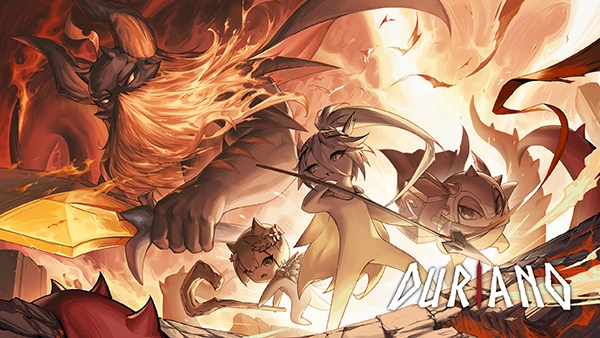
Duriano: Roguelike RPG — New Mobile Release in August 2026 for Android and iOS
Duriano: Roguelike RPG became one of Adisoft Gaming’s notable mobile releases in August 2026, bringing its unusual combination of top-down arena combat, roguelite progression and Norse mythology to a wider smartphone audience. The game had already been available on Android, while its official iOS launch in mid-August made the adventure accessible on iPhone and iPad as well. Instead of taking the usual dark-fantasy approach to Norse legends, Duriano places a durian-shaped warrior at the centre of the story and sends this unlikely hero against monsters, mythical enemies and gods of Asgard. Beneath the humorous visual idea is a progression-focused action RPG built around short combat runs, character development, weapon combinations and the gradual creation of increasingly effective builds.
What Duriano: Roguelike RPG Brings to Mobile in 2026
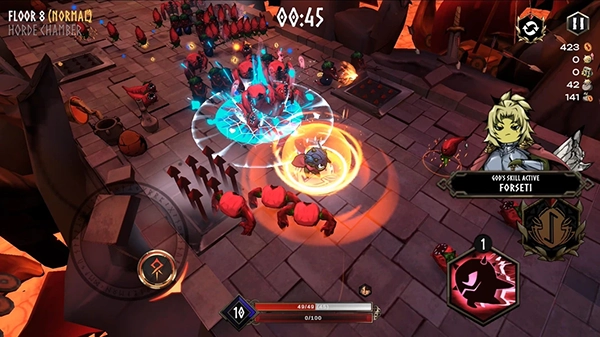
Duriano is best described as a top-down arena roguelite with action-RPG elements. Players control a Durian Hero directly while enemies enter the combat area from different directions, forcing constant movement, positioning and quick decisions. The basic concept is easy to understand: defeat enemies, collect experience, become stronger during the current run and survive increasingly demanding encounters. The game avoids an unnecessarily complicated opening and introduces most of its systems through repeated play, making it accessible to people who understand mobile action games even if they have little experience with traditional roguelikes.
The August 2026 mobile situation is slightly different between the two major operating systems. Duriano was already available through Google Play before August, while Adisoft officially announced its iOS release on 16 August 2026 and followed with another announcement on 17 August confirming availability for iPhone. The Android edition continued to receive active support at the same time, with Google Play listing an update dated 20 August 2026. By September, the Android listing had passed 100,000 downloads, showing that the game had already built a substantial mobile audience rather than starting from zero when the iOS edition arrived.
The mobile editions use the same central idea rather than presenting separate games for different devices. Players choose a character, select a weapon and combine those choices with God’s Trails and various items to shape each run. This structure gives Duriano more variety than a simple arena survival game in which only raw damage increases matter. A character that feels comfortable with one weapon can behave very differently when paired with another set of divine abilities, while random upgrades during a run can encourage a player to change the original plan rather than repeat an identical strategy every time.
A Norse Adventure Built Around an Unusual Durian Hero
The most immediately recognisable part of Duriano is its protagonist. Instead of a conventional Viking warrior, knight or mythological demigod, the player controls a stylised durian hero connected to a fantasy interpretation of Norse mythology. Adisoft describes these heroes as warriors travelling through the Nine Realms and confronting the gods of Asgard. The idea deliberately mixes a playful character design with familiar mythological themes, helping the game establish its own identity without requiring players to understand every detail of Norse mythology before beginning.
That setting also influences the progression systems. Divine powers are not simply background decoration: God’s Trails are part of character building and can affect which upgrades are most useful during a run. Weapons, characters and divine paths are selected with different combinations in mind, encouraging experimentation rather than pushing every player towards a single fixed setup. The result is a system in which two runs with the same hero may develop differently depending on the available upgrades, the chosen weapon and the divine abilities prioritised along the way.
The presentation remains comparatively light despite the mythology and combat. Duriano uses colourful 3D environments and exaggerated characters instead of aiming for realism, which fits the unusual premise of fruit-shaped Norse warriors. The tone does not prevent encounters from becoming demanding, particularly when stronger enemies, elite opponents and bosses appear. This balance between an approachable appearance and increasingly difficult combat is important to the game’s design: its characters may look playful, but surviving later stages still depends on movement, upgrade choices and understanding which combinations work effectively together.
How Combat, Builds and Progression Work
Most of a Duriano run revolves around defeating groups of enemies while gathering experience points. Once the EXP bar is filled, the character levels up and receives access to a Fate Flavour, one of the temporary upgrade choices used to develop the current build. These upgrades are more meaningful when they complement the God’s Trail selected before or during the run. Choosing compatible improvements can strengthen that divine path, so progression involves more than simply taking whichever option displays the largest immediate increase in damage.
Enemies also drop Norse Coin, a separate resource used during a run. The coins can be spent in shops on items that improve character statistics, augments that strengthen weapons and other useful options. Players can also spend resources to reroll available Fate Flavours or items when the current selection does not suit the build they are developing. This gives the player some control over the random elements typical of roguelite games. Luck still affects which upgrades appear, but an unsuitable choice does not always have to be accepted immediately.
Weapon selection is another major part of the experience. Duriano is designed around combining the behaviour of a character with a weapon and a chosen divine route rather than treating weapons as simple cosmetic alternatives. Some combinations encourage aggressive movement through groups of enemies, while others work better when the player controls distance or focuses on survival. Because later encounters can punish weak combinations, early choices often influence how comfortably a run develops. Learning which effects complement one another is therefore part of the progression, even when the individual controls remain straightforward.
Permanent Growth Between Individual Runs
Like many roguelites, Duriano does not remove every form of progress when a run ends. Players receive Fertilizer, a resource that can be used to improve permanent statistics. This means unsuccessful attempts can still contribute to longer-term development. A player who reaches a difficult encounter and loses may return with slightly stronger permanent attributes after investing the resources earned during previous attempts. The system provides a clear reason to continue playing even when a particular run ends earlier than expected.
Fertilizer also has another purpose: it can be used to unlock certain characters. Adisoft’s current game page presents Duriano as having ten character types, expanding the number of possible approaches compared with its earlier Early Access period. Different heroes have their own mechanics and preferred styles of play, so unlocking a new one is more significant than simply changing appearance. Trying another character can alter movement, survivability or the kinds of weapon and God’s Trail combinations that feel most effective.
This permanent progression helps Duriano maintain a relatively accessible rhythm on mobile devices. A short session can still produce useful resources, while longer sessions give players more time to experiment with combinations and push further through the available encounters. The game therefore does not require every attempt to end in victory before progress feels meaningful. Its structure is based on repeated runs in which knowledge and permanent upgrades accumulate together, allowing players to improve both the hero’s statistics and their own understanding of enemy behaviour.
Android and iOS Availability, Updates and Current Mobile Experience
As of September 2026, Duriano: Roguelike RPG is available on both major mobile ecosystems. Google Play lists Adisoft Gaming as the developer and shows more than 100,000 Android downloads. The Android listing also confirms in-app purchases and an update dated 20 August 2026. The game can be downloaded initially as a free demo without advertisements, after which the full game can be unlocked. This approach lets players test the combat loop and general presentation before deciding whether they want access to the complete experience.
On Apple devices, Duriano officially arrived in August 2026 and is available for iPhone and iPad. The App Store lists Adisoft Gaming Co., LTD as the developer and categorises the title as an action game. The store information available in September 2026 shows a download size of roughly 788 MB, although installation size and requirements can change with future updates. The iOS edition also includes in-app purchases and follows the same core model of offering access to a demo before the complete game is unlocked.
Adisoft continued updating Duriano shortly after the iOS launch rather than treating the release as a finished one-off product. Version 1.3.2, listed on the App Store in August, introduced the Tinkerer and Serpentine Enchantress as new characters. The update also added daily reward notifications on mobile, improved the Give Up system and Codex information, adjusted the visual size of elite enemies and addressed text-display and resolution-reset issues. These changes are particularly relevant for a mobile roguelite, where interface clarity and reliable controls can have a noticeable effect during fast arena encounters.
Who Is Duriano Likely to Suit?
Duriano is primarily aimed at players who enjoy action games built around repeated runs, gradual progression and experimenting with character builds. Its basic controls and top-down perspective are relatively easy to understand, but the combination of characters, weapons, Fate Flavours, God’s Trails and permanent upgrades gives players enough flexibility to test different approaches over time. Someone looking for a traditional story-heavy role-playing game with lengthy dialogue and fixed quests may find the structure unusual, because the main focus is combat and progression rather than linear storytelling.
It is also a reasonable entry point for mobile players who find some roguelikes too punishing. Losing a run still matters, but permanent upgrades mean that time spent playing can continue to strengthen the account. At the same time, Duriano does not remove the need to learn enemy patterns or make sensible upgrade choices. Stronger statistics can help, but later encounters still reward movement, awareness and combinations that make sense for the selected character. This creates a middle ground between completely casual arena games and more demanding roguelikes that reset almost everything after defeat.
By September 2026, Duriano is no longer simply an experimental Early Access project. Its arrival on iPhone and iPad, continuing Android support, expanded character roster and post-release fixes show a game that has moved into a broader stage of mobile availability. The unusual durian heroes may be the first detail people notice, but the lasting appeal comes from the familiar roguelite cycle underneath: start a run, build a character from changing upgrade choices, face increasingly dangerous opponents, earn permanent resources and return with another combination. For players who prefer compact action sessions with enough progression to make repeated attempts feel different, Duriano offers a distinctive interpretation of the mobile roguelite RPG format.