

Girls’ Frontline 2: Exilium Mobile: Does Tactical Depth Work in Short Sessions?
Girls’ Frontline 2: Exilium Mobile represents a shift from the original title’s semi-automated combat towards a more deliberate, turn-based tactical system. On mobile devices, where players often engage in short bursts, this raises a practical question: can meaningful tactical depth coexist with limited session time? Looking at its mechanics, pacing, and mission structure as of 2026, the answer depends less on raw complexity and more on how efficiently that complexity is delivered to the player.
Core Combat Design and Its Adaptation to Mobile Play
The combat system in Girls’ Frontline 2: Exilium is built around grid-based positioning, line-of-sight calculations, and unit-specific abilities. Each encounter demands attention to terrain, cover mechanics, and turn sequencing. Unlike many mobile tactics games that simplify these elements, Exilium retains a level of depth closer to PC strategy titles, which immediately sets expectations higher for player involvement.
However, the developers have clearly adapted these systems for mobile interaction. Movement ranges are visually highlighted, skill effects are previewed before confirmation, and turn resolution is fast. This reduces friction without removing decision-making layers. As a result, even complex engagements can be understood and executed within a few minutes, making them viable for short sessions.
Another key factor is the modular nature of encounters. Missions are divided into smaller objectives, often lasting between three and seven turns. This segmentation allows players to complete meaningful tactical sequences without committing to extended playtime, which is essential for mobile usability.
Balancing Depth with Accessibility in Tactical Systems
Accessibility does not mean simplification in Exilium; instead, it relies on clarity. The interface communicates probabilities, damage expectations, and enemy intent in a readable format. This reduces the cognitive load typically associated with tactical games, especially on smaller screens.
At the same time, the game avoids automation shortcuts that would undermine its strategic core. There is no fully reliable auto-play for difficult missions, meaning player input remains central. This design choice reinforces engagement, even during brief sessions, as each decision carries weight.
Importantly, the learning curve is distributed over time. Early missions introduce mechanics gradually, allowing players to build competence across multiple short sessions rather than requiring long initial play periods. This pacing aligns well with mobile usage patterns in 2026.
Session Structure and Player Time Investment
Short session compatibility depends heavily on how the game structures its activities. Girls’ Frontline 2: Exilium offers a mix of quick missions, resource farming stages, and longer narrative operations. The shorter missions are clearly designed for mobile players who may only have five to ten minutes available.
Daily tasks and progression systems are also segmented. Resource collection, equipment upgrades, and character management can be completed in brief intervals. This ensures that even outside of combat, players can make tangible progress without extended playtime.
Longer missions do exist, particularly in story chapters and event content. However, these are optional and often include checkpoints. This allows players to pause and resume without losing progress, a feature that has become standard in mobile strategy titles by 2026.
How Mission Design Supports Short Gameplay Cycles
Mission design in Exilium focuses on clear objectives and limited scope. Rather than sprawling maps with multiple simultaneous goals, most encounters centre on one or two priorities, such as eliminating key targets or securing specific positions.
This approach reduces decision fatigue and helps players stay focused during short sessions. Each mission feels complete in itself, rather than being a fragment of a much larger engagement. This is particularly important for maintaining satisfaction when playtime is limited.
Additionally, failure is not overly punitive. Players can quickly retry missions with adjusted tactics, which encourages experimentation without requiring long recovery periods. This loop fits well into the stop-and-start nature of mobile gaming.
Strategic Depth Over Time: Progression and Team Building
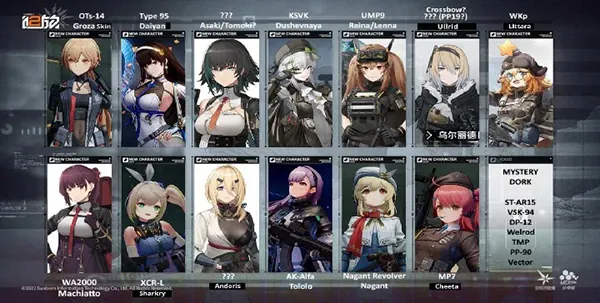
While individual sessions may be short, the broader strategic layer unfolds over time. Team composition, character upgrades, and equipment choices introduce long-term planning elements that extend beyond single missions. This ensures that depth is not lost, but redistributed across multiple sessions.
Each character has distinct roles, abilities, and synergy potential. Building an effective squad requires understanding how these elements interact, which adds a layer of meta-strategy. Players gradually refine their teams based on mission requirements and available resources.
The progression system reinforces this approach. Upgrades are incremental and often require resource management decisions. This creates a sense of continuity between sessions, as each short play period contributes to a larger strategic goal.
Long-Term Engagement Through Incremental Strategy
Exilium maintains player engagement by linking short-term actions to long-term outcomes. Even a single completed mission can unlock materials or experience that influence future performance. This makes brief sessions feel meaningful rather than disposable.
Events and limited-time challenges further support this structure. They are typically designed with scalable difficulty, allowing players to participate regardless of session length. This ensures that both casual and dedicated players can engage with new content.
By 2026 standards, this balance between immediate tactical decisions and ongoing strategic development is what allows Girls’ Frontline 2: Exilium to function effectively on mobile devices. The game does not reduce its depth; instead, it distributes it in a way that aligns with modern player habits.